A brief break from the general election today for summaries of some of the reports that have come out of the Senedd's committees over the last couple of weeks.
This site is no longer updated
Please use the links in the sidebar to visit the new sites!
Showing posts with label Iaith Gymraeg. Show all posts
Monday, 22 May 2017
Committees Bite Size #4: May 2017
By OwenMonday, May 22, 2017COM, CULT, Curriculum, EIS, EmpSk, Hospitals, Iaith Gymraeg, INQBrief, PAC, Stage1, Tax, Unions, WhitehallView Comments
A brief break from the general election today for summaries of some of the reports that have come out of the Senedd's committees over the last couple of weeks.
Wednesday, 29 March 2017
Post-Brexit goals for Welsh farming outlined
By OwenWednesday, March 29, 2017Australia, Barnett, Brexit, BudgetWG, Conserv, EmpSk, ENV, EUCOM, Farming, FirstMin, FreeMove, HotelPub, Iaith Gymraeg, INQ, Ireland, NZ, Powers, Trade, WGEnv, WhitehallView Comments
![]() |
| (Pic : Wales Online) |
Last week, the Senedd's Environment Committee published its report on the future of Welsh agriculture and land management (pdf).
Tuesday, 28 February 2017
Tuesday, 14 February 2017
FMQs: No Love Lost
By OwenTuesday, February 14, 2017Anglesey, Business, Carms, Climate, Cons, Crime, Elderly, Energy, FirstMin, FMQs, Iaith Gymraeg, Labour, Marine, Plaid, Schools, Swansea, Third Sector, UKIPView Comments
The increasingly fractious row over Carmarthenshire Council's decision to make Llangennech School Welsh-medium-only continues. Plus, other questions on climate change, scams/cold calling and the Welsh Government “leaning” on lobbyists and the Third Sector.
Tuesday, 7 February 2017
Tuesday, 10 January 2017
FMQs: Norway, Steel & Bird Flu
By OwenTuesday, January 10, 2017Brexit, Cons, FirstMin, FMQs, FreeMove, Hospitals, Iaith Gymraeg, Labour, Medicine, MHealth, Norway, Plaid, SteelSOS, UKIP, Vets, WGHealth, YPeopView Comments
It may be a new year, but one of the constants in the world is getting the same old stuff from the Senedd. Even if this site isn't considered good enough anymore, my thankless gruntwork continues for now (as promised) – though regular readers will notice I'm going to pull back the throttle over these next/final few months.
As everyone's persistently whinging that Assembly proceedings are dull, I've decided to liven things up a bit by providing a relevant "invigorating soundtrack" in lieu of Senedd TV. 😈
FMQs, 10th January 2017
Party Leaders
Plaid Cymru leader, Leanne Wood (Plaid, Rhondda) called back to September (Mindfulness, Tourism & Winter is Coming), where she asked the First Minister about Child & Adolescent Mental Health (CAMHS) waiting times. He told her resources had been put in and waiting times will reduce. Leanne pointed to statistics saying the numbers waiting 16 weeks+ got slightly worse over the year, and the threshold to receive treatment was too high, resulting in patients being turned away. When could people expect improvements?
The First Minister told her the number of CAMHS admissions has stayed steady, with new money expected to make a difference. He stood by his view that children are being added to waiting lists without cause; CAMHS is an acute service, he wouldn't expect children to be referred to it automatically - they should/would go to a GP first.
Conservative leader, Andrew Davies (Con, South Wales Central), highlighted the considerable speculation over merits of the Tata Steel deal (here) – subject to a union ballot this month. It was important to understand the gravity of the situation as workers are being asked to give up something (pensions will be changed) in return for job security.
Before Christmas the First Minister said it was, “a deal (we) can endorse”; is that still his opinion? What would the consequences be if the deal were rejected (as suggested by Plaid Cymru)?
Carwyn was aware of members' concerns on pensions (raised in an earlier question), but there's "no Plan B", admitting (with unusual frankness) that,“it's this plan or no plan”. Other consortia interested in taking over Tata's operations were as concerned about pensions too. He was, however, disappointed the UK Government haven't taken as keen an interest in steel since Theresa May came to power.
UKIP leader, Neil Hamilton (UKIP, Mid & West Wales), asked what conclusions the First Minister drew from his recent fact-finding trip to Norway, particularly with regard free-movement? The reality is 508 million Europeans have a right to move to the UK and EEA membership would mean the same. He suggested a visit to South Korea, where they've agreed an EU free trade agreement without the burden of free movement.
The First Minister accepted Norway may not support EU membership but does support EEA membership (see more: What sort of Brexit suits Wales?). The rules are applied in Norway to allow freedom of movement for labour/workers – something he believes the UK public may support as a reasonable option.
Free trade agreements take years to negotiate, and officials he's spoken to find a two year timetable for a UK-EU free trade agreement “laughable”.
Backbenchers
Sian Gwenllian AM (Plaid, Arfon) asked how regional economic policies will sit alongside the ambition to have a million Welsh-speakers by 2050? Social and economic opportunities are essential, and national/public institutions (she suggested the Welsh Revenue Authority) should be established in Welsh-speaking areas.
The Welsh Government have consulted on the draft vision, with a finalised document discussing the relationship between economic development and the Welsh language. The First Minister asked officials to consider basing public bodies outside Cardiff, including the Caernarfon area or elsewhere in Wales.
Adam Price AM (Plaid, Carms. E. & Dinefwr) asked what plans the Welsh Government had to promote Welsh goods/produce to Welsh consumers? Many countries have an official “country of origin” brand for consumers. Can we have a strong brand for Wales to withstand the “economic lunacy of Westminster”?
The Welsh Government have taken a a number of actions, including working alongside the National Procurement Services to increase Welsh produce in the public sector. Welsh produce now has far better label than 15 years ago, and a “Brand Wales” may be advantageous to some companies but not to others. Carwyn stressed the importance of not having tarrifs applied to Welsh food and drink exports to the EU.
Joyce Watson AM (Lab, Mid & West Wales) asked for an update on the recent confirmed outbreak of avian flu in Wales. She praised the actions of Llanelli Wetland Centre for closing its doors to the public when the virus was detected to prevent its spread.
The First Minister described it as a matter of serious concern, with work undertaken with other governments to co-ordinate action. The Welsh Government's advice is updated continuously, and he called for those who work with birds to check it regularly.
Urgent Questions
Rhun ap Iorwerth AM (Plaid, Ynys Môn) asked for a statement on the Royal College of Emergency Medicine comments that emergency care in Wales was in a “state of crisis”. Figures from November 2016 showed only 77% of A&E patients were seen in 4 hours, and this was likely to get worse. Didn't the Health Secretary think it was an embarrassing situation for Labour colleagues in Westminster trying to attack Jeremy Hunt over recent bad headlines?
Health Secretary, Vaughan Gething (Lab, Cardiff S. & Penarth), praised staff, who always face pressure in winter and who he didn't want to see demoralised. He rejected any idea there was a “crisis”, but accepted there were very real pressures.
We all need to think sensibly and be accurate in our language about where we are in Wales; England runs different systems and Wales has avoided the headline-grabbing comments from the Red Cross and hasn't seen as harsh cuts in care budgets. Objectively-speaking we're in a better position than we were last year.
Tuesday, 14 June 2016
FMQs : EU, Opencast & Orlando
By OwenTuesday, June 14, 2016BudgetWG, Cons, Energy, EU, Farming, FirstMin, FMQs, Iaith Gymraeg, InOutRef, Labour, LGBT, Mining, Plaid, Planning, PUBH, Regs, Terrorism, USAView Comments
Another week, another edition of First Minister's Questions with a wide range of topics from farming to planning and the Welsh language.
Sunday, 13 March 2016
Fourth Assembly In Focus : Education
By OwenSunday, March 13, 20164WGEd, BudgetWG, Colleges, Curriculum, Election 2016, Iaith Gymraeg, Labour, Lib Dems, Poverty, Schools, UniversitiesView Comments
Following the economy and health, my final in-depth look at policy during the Fourth Assembly goes into our classrooms and lecture theatres.
Major Policy Initiatives of the Fourth Assembly
The Donaldson Review – A major review, led by Prof. Graham Donaldson, into the national curriculum in Wales. The proposals mirror those applied in Scotland in 2010, though they're not expected to be fully rolled-out until 2021. They include the scrapping of key stages, the creation of six learning areas and requiring all teachers to have cross-curriculum competences in literacy, numeracy and IT (see also : Detention for Donaldson?). The goal is to create "ambitious, capable learners" who are "healthy and confident".
Schools Challenge Cymru & Regional Consortia – If there's one thing Huw Lewis likes it's new schemes and organisations. The first was aimed at raising standards at the 40 worst-performing schools in Wales by applying additional resources; indications from 2015's GCSE results are that there's been an improvement in the number of pupils achieving 5 good grades. The second scheme is supposed to lead school improvement and share best practice, but reports from Estyn and Wales Audit Office have painted a mixed picture due to uncertainty over their role and a lack of monitoring.
Literacy & Numeracy Tests/Framework & School Banding – Wales was one of the first home nations to scrap the controversial end of key stage SATS tests in 2004 alongside school league tables. Leighton Andrews effectively reintroduced them in 2013 as compulsory literacy and numeracy tests. This was joined by colour-coded school rankings. Both have been criticised by teaching unions; the first for marking rows and statistical issues, the second for causing school rankings to fluctuate wildly year-to-year. A report earlier this year also suggested the improvements sought by the framework could take several years to permeate through, with few indications of an impact so far.
Reorganisation of Colleges & Universities – A Welsh Government-led rationalisation of the further and higher education sectors resulted in several mergers which have created, amongst others, the University of South Wales, Trinty St Davids University (UWTSD), NPT Group, Coleg y Cymoedd and Cardiff & Vale College. It's unclear whether the upheaval caused by mergers has impacted staff or student morale, but it has prompted major capital investments in new campuses, such as Cardiff & Vale College in Butetown or the proposed new UWTSD campus in Swansea SA1.
Education Funding
![]() |
| Pupil spending per head - source |
One of Labour's key election manifesto commitments in 2011 was to keep school spending at 1% above any changes to the block grant Westminster uses to fund Wales.
It's quite clear that although spending-per-head has risen over the course of the Fourth Assembly, in the last two years or so Labour probably didn't keep their promise, presumably as more money was diverted to the NHS or by double counting the pupil deprivation grant. Although there have been "real terms" cuts to the block grant, in cash terms it's increased modestly. Therefore, you would've expected schools spending to have risen in line with that throughout the term – but it's unclear whether it has or hasn't.
Elsewhere, the 21st Century Schools programme has been maintained through the Fourth Assembly, though it's been scaled back and delayed from the original £1.4billion six-year programme announced in 2011, with the Finance Minister seeking non-profit distributive finance in 2014.
The other major scheme is the Liberal Democrats' Pupil Deprivation Grant (PDG), which pays schools £1,050 every pupil aged 5-15 who's eligible for free school meals. It's due to be increased again to £1,150 from 2016-17. There are also smaller payments for Foundation Phase pupils. In 2015-16 the grant totalled £72.4million. Although independent reviews have shown that the PDG has made a difference there've been concerns about how it's being spent.
I'm yet to be convinced that throwing money at problems actually fixes anything. The only area of government policy where that genuinely works is infrastructure, and we've been throwing money at the NHS for the best part of a decade without it really getting us anywhere. The same goes for schools; it comes down to the quality of teachers, class sizes, teacher workloads and the curriculum.
Exam Results
![]() |
| Key exam pass rates - source (GCSE), source (FSM), source (A-Level) |
I suppose this is the key measure and there's clear good news, with pass rates steadily rising over the Fourth Assembly at GCSE level, while A-Level pass rates remain relatively high. The next round of PISA results are unlikely to be released before the end of the year, but that's where attentions were focused on a few years back and will be again for whoever succeeds Huw Lewis (see also : A slice of frozen PISA).
The percentage of pupils getting 5 A*-C grades at GCSE, including either English or Welsh and mathematics (Level 2 threshold), is close to hitting 60%. Meanwhile, the functionally useless pass rate marker for A-Level remained at around 97%.
The link between poverty and poor educational attainment has been well established and, not unsurprisingly, the GCSE Level 2 pass rate for those eligible for free school meals remains significantly below average – although Level 2 pass rates have increased in line with GCSE passes for everyone else, and the gap has closed by around 2-3% over the last five exam cycles (see also : AMs demand action to close education gap).
Schools Challenge Cymru was established provide extra help to those schools which are defined as struggling for whatever reason, and some of these 40 schools selected for the programme have seen progress on GCSE results. It's too early to tell whether the scheme as a whole will be a success or not, but there are reasons to be cautiously optimistic.
Further Education
With the ever growing emphasis on work-based learning/apprenticeships this term, you would've thought that the further education sector will be going through a period of growth and investment. In many respects it has – but unfortunately the relevant statistics have only been collected/reported for two years.
What they point to is a decreasing number of college students but an increase in the number of work-based learners and apprenticeships (source). Behind the scenes, however, there's been quite a bit of upheaval (as touched on earlier) with college mergers being pushed through and sizable cuts to the further education budget in some of the budgets passed by the Assembly this term.
So the future looks like being one of fewer, bigger colleges and that brings into question the future of some of Wales' smaller institutions, like Coleg Ceredigion and perhaps even the likes of Bridgend College and Coleg Sir Gar. With some local authorities actively, or actively considering, closure of sixth forms then the role of FE colleges could be about to become greater. Any incoming government will have to ensure there's some focus on the knock-on impact such policies might have on the sector in terms of things like staff, facilities and transport.
Universities
One of the headline, and most contentious, policies of the Fourth Assembly is the tuition fee subsidy, where Welsh-domiciled students only pay up to £4,000 a year regardless of where they choose to study, with the Welsh Government making up the rest. Means-tested living grants have also been made available to those from low income families.
The spirit of the policy is perfectly correct, but ever since the previous Conservative-Lib Dem UK Government lifted the cap on tuition fees, it's clear the policy is becoming increasingly burdensome on the Welsh budget, and is widening the university funding gap between Wales and England – currently estimated to be as high as £115million – while the policy itself was recently estimated to have cost £235million (see also : Welsh tuition fee policy under scrutiny).
Nonetheless, the wrangling over fees and university finance hasn't deterred people from going to university. The number of Welsh-domiciled undergraduates has stayed broadly at the same level of around 78,000 a year since 2011-12 (source), however, while in 2011/12 46% of Welsh-domiciled students studied at a Welsh university, that's dropped slightly to 45% in 2013/14 – presumably because of the tuition fee policy.
It's also worth pointing out that the vast majority of Welsh-domiciled postgraduates who are still based in the UK study in Wales (67%).
Welsh-medium Education
Labour set no concrete targets for the number of pupils educated in Welsh in their 2011 manifesto and they're lucky they didn't.
![]() |
| Percentage of pupils taught mainly or wholly in Welsh - source |
Broadly-speaking the numbers of pupils educated in Welsh has increased over the last five years, but there was a surprise dip in the number of secondary school WM pupils in 2014-15, presumably because of a general drop in roll numbers at that age group. Unsurprisingly, most WM pupils live in Y Fro Gymraeg (Gwynedd, Anglesey, Ceredigion, Carmarthenshire), with only Rhondda Cynon Taf and Cardiff having any significant figures outside this area.
There are 36 fewer Welsh-medium schools in 2015 than in 2010. Meanwhile, the number of teachers qualified to teach through Welsh over the same period has remained relatively stable (source)– so it's safe to say Welsh-medium education has expanded at the bottom, but contracted at the top.
![]() |
| Welsh language exam results - source (full course), source (short course) |
Next, it's performance in Welsh. The most notable surprise is that GCSE A*-C pass rates in Welsh second language have overtaken Welsh first language. There are a number of possible explanations. Pupils taking the second language full course are going to be more committed than short course students, while as it's taught as a second language it's going to be easier than being taught as a first language (which will be more in-depth). However, pass rates for Welsh first language are, generally, higher than English language (which is also taught in WM schools).
The Education Workforce
![]() |
| The education workforce - source |
The only things really worth taking from this are the decrease in the number of headteachers and the growing numbers of teaching assistants.
The latter can probably be explained by the roll out of the Foundation Phase (see also : Foundation Fazed) where a lower staff:pupil ratio is mandated – so these figures aren't unexpected. The problems will start to arise when teaching assistants start teaching, and trade unions have claimed assistants have been asked to stand in for fully-qualified teachers.
Like other parts of the public sector, the teaching workforce is ageing and it's unclear whether there are enough new teachers coming through to take their place. Teaching has an increasingly bad reputation because of the pressures of the job and bureaucracy. Judging by the number of vacancies advertised there appears to be particular problems in recruiting English, maths and (what I presume is Key Stage 3) science teachers (source).
The fall in the number of headteachers could be explained by a simple fall in the number of schools – through closure of small rural schools, mergers or "federated schools". Nevertheless, schools need some sort of leadership and it's slightly worrying that, with the falling number of headteachers, the careers of some promising leaders might stall.
Conclusions
If Labour's record on the economy is broadly "good", and their record on health is broadly "bad" then their education record is mixed with clear good and bad points.
In terms of the good news, exam pass rates are improving year on year, a healthy proportion of young people are going to university and there's been extra help to close the gap in performance between poorer and wealthier pupils.
The PISA scores in 2012 (A slice of frozen PISA) perhaps caused some unnecessary panic – though we're unlikely to find out 2015's results until the end of 2016. The other bad news would be that the Welsh Government haven't really lived up to any non-binding promises they made on Welsh-medium education, while the gap between the best-performing and worst-performing pupils remains dauntingly large. It's also becoming clear current tuition fee policy is untenable.
Like health, the last thing teachers are going to want to hear are more proposals from political parties for "major reforms"; the Donaldson reforms are going to be significant in their own right.
Teachers need to be given a bit of breathing room and existing reforms need a chance to properly bed in; but I'm worried that if there's another set of bad PISA results – or some knock on impact on schools as a result of local government reorganisation - we're going to end up with politicians running around like headless chickens again demanding answers and immediate action on issues that often take years, if not decades, to resolve themselves. We deserve cool heads on this.
Monday, 16 November 2015
Groundhog Day : Auditing the Welsh Media
By OwenMonday, November 16, 20154WGCulTor, 4White Papers, BBC, Blogosphere, BT, BudgetUK, DCMS, Film, Gaming, Iaith Gymraeg, Internet, ITV, IWA, Radio, S4C, UK Press, Welsh PressView Comments
![]() |
(Pic : BBC Wales) |
The IWA's online organ, Click on Wales, released drafts of the report's sections throughout October, but the full and final report is now available at around 150 pages long (pdf). It's an incredibly useful analysis, but not anything we haven't heard before.
The state, and decline, of the Welsh media has been discussed on and off for the best part of a decade – such discussions being even more important this year in the context of negotiations on the BBC's Charter renewal. This site's no exception :
- Saving the Welsh press (29.11.11)
- Future of the Welsh media report (15.5.12)
- More questions on the future of the Welsh press (4.2.13)
- Broadcasting Wales Parts I-VIII (September 2013)
- The Assembly & The Democratic Deficit (12.11.13)
- How Local is "Local TV"? (18.1.14)
- Senedd on the Box (2.10.14)
- Strapped 4 Cash? (27.6.15)
- Downloading (22% - 2 years left)....(8.7.15)
- You Won't Believe What Happens Next....(14.9.15)
Television & Public Service Broadcasting (PSB)
![]() |
- Digital terrestrial television reach in Wales (97.8%) is marginally below the UK average (98.5%). Virgin Media's cable services only reach 23% of Wales and hasn't changed since 2004, this is well below the UK average of 44%.
- Wales has the highest proportion of HD-ready televisions and take-up of HD services of the Home Nations (Wales = 76%; UK average = 73%).
- Made in Cardiff – currently Wales' only local TV station – has a weekly reach of 196,000 viewers.
- Overall viewing minutes have fallen consistently across the UK – particularly amongst children and the under-35s - but Welsh viewers spend longer watching PSB than any other part of the UK.
- Over a third of viewers in Wales used "catch-up" services in 2014. BBC iPlayer, Sky, ITV Player and 4OD are the most popular services. Netflix has grown significantly in popularity since 2012. A majority of catch-up services are viewed on television, but increasingly on tablet computers too, while there's a decline in PC/desktop views.
- BBC Wales, ITV Wales and S4C spent a combined £215.35million on PSB services in 2014-15, a decline of £19.25million (8.2%) on 2008.
- Since 2008, there've been 545 fewer TV hours produced (all BBC and ITV; S4C saw an increase) and 1,187 fewer hours of radio programming since 2008.
- BBC and ITV produced 17.5 hours of English language output per week in 2015, compared to 24.5 hours in 1990 – a 48% reduction. ITV Wales now only produces 5.5 hours, compared to 15.5 in 1990.
- 63% of BBC's English language output was current affairs, news or politics. Just 2.8% was comedy, drama and the arts.
- S4C's funding fell from £104.4million a year in 2010 to £85.7million in 2014-15 – a reduction of 18.4%. They spend, on average, about £31,000 per hour, though drama productions can cost up to £140,000 per hour.
- In 2014, 3.2% of PSB network production spend was in Wales, compared to a population share of 4.9%. 65.4% was spent in London and Southern England.
- BBC Wales and independent producers provided £60.3million worth of UK network shows in 2014-15, primarily dramas.
- Average listening hours per week in Wales fell from 24.4 hours in 2007 to 22.4 hours in 2014 – however weekly listening hours are the highest of the Home Nations. Radio also had a bigger reach at 94.5% of the adult population, compared to 89.4% across the UK.
- Wales has the highest share of BBC Network listeners in the Home Nations at 49% of listeners.
- Reach figures for BBC Radio Wales and Radio Cymru have shown steady declines, from 435k and 155k respectively in 2008-09 to 418k and 119k respectively in 2014-15.
- Ownership of digital radios (DAB) is also highest in Wales amongst the Home Nations at 47% (UK = 43%). This brings Wales very close to the 50% threshold set by the UK Government whereby they would consider a digital radio switchover.
- BBC Radio Wales and Radio Cymru spent a combined £20.6million on programming in 2014/15 and cost per hour was near enough the same for each (£1.5k-1.6k).
- Commercial radio has the lowest listening share in Wales amongst the Home Nations at 39%, compared to the UK average of 43%. Wales also generated the lowest commercial radio revenues of the Home Nations at £14.9million.
- Only three companies control commercial stations in Wales – Global Radio, UTV and Town & Country Broadcasting. Digital switchover may mean commercial stations are "released entirely" from their local obligations.
- 78% of premises in Wales have taken up broadband services, compared to 42% in 2006.
- 79% of Welsh households have access to super fast broadband – more than Scotland (73%) and Northern Ireland (77%).
- 3G mobile broadband outdoor services reach 97.9% of Welsh households. However, outdoor 4G services currently only reach 62.8%, compared to the UK average of 89.5%.
- Welsh newspapers have seen massive declines in daily circulations since 2008, ranging from falls of more than 50% for the Western Mail, South Wales Argus and South Wales Echo to just a 6.3% fall for the south Wales version of Metro.
- These numbers are, generally, in line with declines in newspaper sales elsewhere, with some UK papers suffering even steeper declines.
- Online there's said to be a "more level playing field" between Trinity Mirror and BBC, with Wales Online and Daily Post websites being competitive with BBC Wales Online services in terms of unique browsers. Use of Wales Online has grown by 586% since 2006.
- 59% of adults access BBC online services, and online services are significantly more popular amongst those aged 16-24.
- 27% of people said Facebook was now their main source of local news.
- BBC Wales spent a total of £2.541million on their online services (£399,000 was spent on Welsh language services/BBC Cymru Fyw).
- S4C Clic viewing sessions had increased by 232% since 2013-14, with an additional 500,000 downloads of S4C mobile apps.
- With Trinity Mirror agreeing a takeover of Local World, most of the major national, regional and local newspapers in Wales are owned by just two companies - Trinity Mirror and Newsquest.
- The number of journalists in south Wales has fallen from over 700 in 1999 to 108 in 2013.
- There are said to be 46 "hyperlocal" websites active in Wales, and research has suggested around half of hyperlocal site owners in the UK have had some form of journalistic training – though most were self-funded and only 13% generated more than £500 a month income.
- £1.85million in grants were made available to Welsh language publications in 2013-14, compared to £748,000 for English language publications. 50 papurau bro receive grants of up to £1,900 a year from the Welsh Government.
- S4C launched a £1million digital fund in 2012 to create interactive media and other apps.
- The Welsh Government should establish an independent media panel to monitor media trends and commission studies, working with relevant academic departments.
- Investment in BBC Wales' English language services should increase by £30million a year, ideally via an increase in the licence fee. This must include programming other than news and current affairs.
- S4C's funding and editorial independence must be maintained to avoid slipping into a "cycle of decline". Collaboration between BBC and S4C should be maintained, however.
- BBC 2 Wales and S4C should be broadcast in high-definition.
- The effectiveness of DAB coverage should be assessed before any decision is taken on a digital radio switchover.
- Radio regulation should be devolved to the Welsh Ofcom advisory commission.
- The abandonment of local radio obligations should be reconsidered.
- BBC Radio 1 and 2 should provide an opt-out news service for Wales.
- The UK Government should support BBC establishing an interactive online service for Wales.
- Responsibility for broadcasting should be shared between the UK Government and devolved administrations.
- BBC Audience Councils should be replaced with National Broadcasting Trusts, which would help shape the delivery of a national service licence.
- All PSB broadcasters should lay their annual reports in front of the National Assembly.
- The Welsh Government and Ofcom should commission a joint study into the future of local media in Wales, embracing community radio, papurau bro, hyper-local news websites and local newspapers.
- The Welsh Government should create a "challenge fund" administered by the Arts Council for Wales and Wales Books Council to help develop new local news services.
What the audit missed
![]() |
Magazines - Including (ironically), the IWA's own Agenda, Planet as well as others like Cambria, Barn, Golwg and New Welsh Review. It does mention "publications", particularly with regard papurau bro, but there was little evidence provided on the impact of grant funding cuts on English language magazines or their long-term prospects.
Films & Music - The Welsh film production industry only gets passing mentions, along with music. You would've expected music to have been in there considering recent rows between Radio Cymru and Welsh language musicians. Although this certainly crosses into "the arts", it seems the definition of "media" has been set rather narrowly.
"Citizen Journalism"/The Blogosphere – It's admittedly a grey area, reportedly written off by Culture Minister Ken Skates (Lab, Clwyd South) as "opinion-driven" during the suit-and-sandwich conference because, as we all know, there's little political bias in the mainstream media.
There was a throwaway line about the number of blogs increasing but being "about lifestyle rather than news" - thanks a bunch. I can only speak for myself, and I might get 2% of the South Wales Evening Post's unique browsers on a good day; but I don't know whether being left out is an insult or compliment (sites like Carmarthenshire Planning certainly do count as hyperlocals).
It doesn't really matter because in the absence of public funding, political backing, advertising or publicity it's clear the blogosphere is (relatively) successful and performs a unique function. The Welsh blogosphere's still languishing in the shadows of Scotland's fifth estate; it would take me 20-30 years to match what Wings Over Scotland gets in site metrics in a single year. There's also a high turnover;
Gaming – The Welsh games industry has grown over the last few years from being practically non-existent to including some breakout companies. It's also one of the most popular mediums around, and as big as, if not bigger, than the film and television industries at present. I'm surprised the IWA and politicians haven't cottoned on to that yet. What do they think people, particularly those under the age of 35, are doing if they're not watching television, listening to the radio or reading newspapers? (See also : More than just a game).
A Warning on Funding
![]() |
Time for some mathematical gymnastics to serve as a warning on how to interpret the funding figures in the report and how that fits from a "value for money" perspective. The easiest way to do that is to compare the ratio of amount of money spent versus the audience.
Based on the figures provided for BBC's English language web services, for every £1 they spend, they get 85.5 unique browsers. BBC Cymru Fyw gets 11.5 unique browsers for every £1 spent.
For every £1 I spend directly on Oggy Bloggy Ogwr - without a publicly-funded newsroom, television and radio network to back me up and whilst only posting a few times a week - I get 5,272 unique browsers.
Oggy Bloggy Ogwr is, therefore, 62 times greater value for money than BBC Wales Online and 458 times greater value for money than BBC Cymru Fyw. *Jazz hands*
Not bad for opinion-driven non-media.
Technically speaking, if I put more money into this site its "value for money" would mathematically decrease because the audience is naturally limited and no amount of extra money would change that. Hence that's why complicated political and investigative stories tend to cost a lot of money and get poor returns for broadcasters and publishers, which leads to a downward spiral in coverage.
It also, theoretically, means the "true value" of non-current affairs, non-mainstream television (i.e children's), radio programmes as well as blogs and hyperlocals is likely to be significant in terms of what they bring to the table - perhaps more so than was reflected in the report and in general discussions on the Welsh media.
It's therefore not entirely a funding issue because it doesn't buy you viewers or readers. It's an audience issue and comes down to the quality of the product and how efficiently it's produced.
When you compare what Wales gets from our broadcasters and publishers compared to what the Republic of Ireland gets – utilising similar sums of money and with a similar set up - we're clearly doing something wrong here.
Conclusions
![]() |
It's an incredibly useful analysis, but not anything we haven't heard before.
Individual AMs have made their own concerns known down the years, but it'll take the closure of one of the major Welsh newspapers – probably The Western Mail – or the subsuming of S4C into BBC Wales to actually force the Welsh Government into action. Calls for challenge funds and independent panels (yet another bloody committee) will fall on deaf ears as ministers can, justifiably, say it's not their problem as broadcasting is a non-devolved issue.
We can never, realistically, expect the UK Government to do anything constructive either; as long as UK-wide network shows continue to be watched or made in Wales, as far as they'll be concerned that's job done. A market failure – and that's essentially what this report implies very strongly – is just something that happens.
So it's worth saying again that it's an incredibly useful analysis, but not anything we haven't heard before.
Television and newspapers will remain important for the time being. However, the only rays of hope for the future, it seems, are online – even though Wales Online is close to becoming a parody of itself, and doesn't generate anything close to the same revenues as Media Wales' print productions – and community radio, which is holding up particularly well and isn't getting the attention it deserves in this debate.
I'm concerned there's too much hand-wringing over Wales being seen at the UK level in network shows when major broadcasters and newspaper publishers can't even harness a captive audience at a Welsh level. The success of Y Gwyll/Hinterland has happened by accident because melodramas about troubled detectives with names like Smegmä Smegmässon are in vogue at the moment (to saturation point). That won't last forever, neither will network shows like Casualty and Doctor Who.
Nobody has really explained what they want either. Do they really expect a Welsh political story affecting less than 5% of the UK's population to be given equal treatment to an English one affecting 85% on network news? News bulletins would end up three or four hours long.
There are only two reasons you'll see Wales on the front pages or in the main news bulletins: human tragedy and sport. The murders of April Jones and Tracey Woodford, as well as the Welsh national rugby and football teams, have probably got more coverage and column inches in the UK media than the Welsh Government and Assembly have in 10 years. A BBC network radio news opt-out - recommended in the report - or "Welsh Six" on TV might go some way towards addressing that.
As cynical as it sounds, maybe we just have to come to terms with the fact very little of interest happens in Wales. That's reflected in our politics, our economy and the small-c conservatism that forms the fabric of Welsh society. That's very well represented in our media – including this blog.
So to conclude, the report is an incredibly useful analysis, but not anything we haven't heard before.
Tuesday, 13 October 2015
A Comprehensive Review of Welsh Law-Making
By OwenTuesday, October 13, 20152011Ref, 4Assembly, 4Cabinet, 4CLAF, 4Commission, 4FIN, 4FirstMin, 4INQ, 4White Papers, CivServ, Constitution, Iaith Gymraeg, Northern Ireland, Regs, Scotland, UK Parliament, WAO, Welsh LawView Comments
| We voted to give AMs law-making powers in 2011, so how has the process been handled since? (Pic : National Assembly of Wales) |
Making new laws is the National Assembly's most important function, though it's a role that – apart from a few high-profile cases like the Human Transplantation Act 2013 – draws little in the way of media coverage or scrutiny.
Saturday, 23 May 2015
Pirate Party : Hoisting the Jolly Roger above Wales
By OwenSaturday, May 23, 2015Bridgend, BT, Civil Liberties, Crime, Energy, Germany, Iaith Gymraeg, Iceland, Intelligence, Internet, Medicine, Pirate, Policing, Science, Sweden, USAView Comments
![]() |
| Bridgend's voters were faced with a unique choice on May 7th. Maybe, in future, other Welsh voters will have the option too. (Pic : via Facebook) |
I doubt many people reading this will have heard of The Pirate Party.
"Pirate politics" – the umbrella term used for such parties – is often hard to place on the traditional political spectrum. While the left-wing is mainly focused on inequalities and the right-wing on tradition, pirate politics is based around information : how freely you can access it, who it belongs to and how and why it should be used.
Monday, 12 January 2015
Foundation Fazed
By OwenMonday, January 12, 20154WGEd, Curriculum, Estyn, Finland, Iaith Gymraeg, Labour, Poverty, Schools, Sweden, Universities, YPeopView Comments
![]() |
| Is the Welsh Government's flagship Foundation Phase all its cracked up to be? Despite the headlines, it probably is. (Pic : Twyn School) |
Last week it was reported that a review of the Foundation Phase by WISERD has shown it's failing to live up to one of its key aims,
which is to reduce the gap in performance between children from
well-off families and poorer families.
All of the relevant documents are available here, but you're not going to go through all that, are you? You're not stupid or masochistic enough to do that. Luckily for you, I am.
As you can tell, the report and its supporting documents are much more extensive than the bite size account given by the BBC and Western Mail, so it's worth taking a closer looks to see what impact Foundation Phase - which remains one of the more memorable and radical policies introduced since devolution – is making.
Foundation Phase : An Overview
The
Foundation Phase was launched during the Third Assembly by the then
Education Minister, Jane Hutt (Lab, Vale of Glamorgan), but its origins lie in a ten-year education plan - one of the first such strategies
developed after the National Assembly's establishment.
The original Foundation Phase report, published in 2003, underlined a number of shortcomings in educational attainment for pupils aged 3-7 (Nursery up to and including Year 2).
All of the relevant documents are available here, but you're not going to go through all that, are you? You're not stupid or masochistic enough to do that. Luckily for you, I am.
As you can tell, the report and its supporting documents are much more extensive than the bite size account given by the BBC and Western Mail, so it's worth taking a closer looks to see what impact Foundation Phase - which remains one of the more memorable and radical policies introduced since devolution – is making.
Foundation Phase : An Overview
![]() |
| The Foundation Phase takes children out of the classroom and allows them to learn through self-directed and structured play. (Pic : Carrog School) |
The original Foundation Phase report, published in 2003, underlined a number of shortcomings in educational attainment for pupils aged 3-7 (Nursery up to and including Year 2).
- Pupils were spending too much time on desk-based activities.
- Pupils weren't spending enough time developing creative and communication skills, and in some cases were introduced to formal literacy lessons before they were ready.
- Insufficient staffing levels for younger age groups.
- Pupils weren't given enough independence to learn.
The review
believed this was a direct result of an over-formal approach to early years teaching, which in areas like reading and writing was
said to be "counter-productive". Pedagogical research
showed the most effective ways for children to learn at this age
involve, "problem-solving, exploration, active involvement and
language development through play".
The Nordic Countries (in particular Sweden and Finland) have a much more relaxed approach to early-years education, where formal literacy and numeracy lessons doesn't start until much later in school life. These nations often have exceptionally higher attainment rates too.
The Welsh Government decided they were going to come up with a Welsh version, hence Foundation Phase, which would involve "learning through play" in order to meet developmental needs of children as individuals.
In practice this means younger children are guided to figure out certain concepts for themselves, with teachers and supervisors structuring the play – whether indoors, outdoors or through formal lessons. This has resulted in a whole host of different lesson plans and activities being made available either by the Welsh Government or outside organisations.
The Learning Wales website lists the sorts of activities Foundation Phase pupils do. For example, they learn basic mathematical concepts using toys (i.e. number of toy cows in a field) or through activities like cooking (which introduce concepts like measurement); while literacy and communication skills are developed through something called "circle time" (American-style "show and tell") or discussing favourite books.
It sounds a bit "wishy washy new age teaching" but it does have a certain logic behind it. These school days sound significantly more enjoyable and engaging than anyone reading this will remember, and I suppose you can say it tricks kids into learning.
The Review's Findings
The findings themselves (dated from the 2011-12 academic year) were split up onto several categories on separate documents, so I'll only pick out the most important conclusions.
The Nordic Countries (in particular Sweden and Finland) have a much more relaxed approach to early-years education, where formal literacy and numeracy lessons doesn't start until much later in school life. These nations often have exceptionally higher attainment rates too.
The Welsh Government decided they were going to come up with a Welsh version, hence Foundation Phase, which would involve "learning through play" in order to meet developmental needs of children as individuals.
In practice this means younger children are guided to figure out certain concepts for themselves, with teachers and supervisors structuring the play – whether indoors, outdoors or through formal lessons. This has resulted in a whole host of different lesson plans and activities being made available either by the Welsh Government or outside organisations.
The Learning Wales website lists the sorts of activities Foundation Phase pupils do. For example, they learn basic mathematical concepts using toys (i.e. number of toy cows in a field) or through activities like cooking (which introduce concepts like measurement); while literacy and communication skills are developed through something called "circle time" (American-style "show and tell") or discussing favourite books.
It sounds a bit "wishy washy new age teaching" but it does have a certain logic behind it. These school days sound significantly more enjoyable and engaging than anyone reading this will remember, and I suppose you can say it tricks kids into learning.
The Review's Findings
The findings themselves (dated from the 2011-12 academic year) were split up onto several categories on separate documents, so I'll only pick out the most important conclusions.
- Parents support the principle of the Foundation Phase and have a firm grasp of what it's all about, though 72% would like further information and few parents were involved in day-to-day running. There's also a link between increased enjoyment of school and the teaching methods deployed during the scheme.
- Staff : pupil ratios have changed from 1:19 to 1:10, though only 50% of schools met the recommended 1:8 ratio for 3-5 year olds and 1:15 for 5-7 year olds. The numbers of staff with the prerequisite qualifications has also exceeded expectations, and there are more qualified staff in Wales compared to England. There was resistance amongst a significant minority of staff when Foundation Phase was introduced, and this existed more amongst Welsh-medium staff than English-medium staff and pilot schools. Teachers were generally satisfied with the levels of training and support their received, but there were concerns about "mixed messages" from the Welsh Government which means some teachers are calling for more specific advice.
- There were mixed feelings about the Foundation Phase has on pupils transfering to to Key Stage 2 (ages 7-11), with 19% of teachers saying Foundation Phase was having a negative impact on KS2 (compared to 25% who thought it was positive) . Although there were no major qualms about end of Foundation Phase assessments, there are concerns about levels of uncertainty. Despite this, 85% of parents were happy with reading and numeracy tests taking place in KS2.
- There were no variations between how English and Welsh-medium schools implemented Foundation Phase. 42% of Foundation Phase staff believe that the scheme has improved Welsh-language skills amongst both EM and WM pupils – even use of Welsh when no adults were present. It's said children who don't speak Welsh at home are benefiting the most from Foundation Phase, but EM pupils' English skills had improved more compared to their Welsh.
- Schools spent £15,000 on average improving their indoor environments and £18,000 outdoors (used on average 2/3 times a week, sometimes every day) in preparation for Foundation Phase. Schools said funding would be the factor they would change most about the scheme, particularly for outdoor activities. There was a link between learning outdoors and children being more physically active.
- Schools said their approach to Foundation Phase was "evolving", with some introducing formal literacy and numeracy lessons in the morning to ensure children perform well in KS2 literacy and numeracy tests - with gender gaps persisting in subjects like English and Maths.
- There was broad agreement that Foundation Phase is having a "positive impact" on pupils' well being, attendance levels, attitudes to learning and confidence – in particular boys. However, there was less of a consensus on the positive impact towards literacy, numeracy and amongst more-able pupils.
- The Foundation Phase hasn't done as much to combat social inequalities as it aspired too, with no significant changes (except in isolated cases). There's continuing under-performance in attainment and attendance amongst children who receive free school meals and those with special needs. Focused and targeted intervention, instead of universal programmes like Foundation Phase, are "generally accepted" as better.
A foundation to build on
![]() |
| For the love of all that is holy, this report SHOULD NOT be used as an excuse for another round of education policy tinkering. (Pic : Wales Online) |
Despite some of the slightly-critical reports being produced on the effectiveness of this programme (most have, in fact, been well-balanced between good and bad points), policy-makers are on to something and it's still too early to judge.
Although It's clear this hasn't yet been the transformative magic bullet in early years education the Welsh Government would like it to be, one of the key problems in education policy over the last 5-10 years is that if something doesn't work immediately there's a panic and then a clamour to alter it straight away.
Politicians and civil servants then try and chop and change on the hop, meaning teachers end up bogged down in ever changing guidance and pointers. That goes against the whole ethos of Foundation Phase - while attainment is very important, it isn't the main aim of this - and I hope the Welsh Government resist the temptation to tinker this time.
I suppose the only people who have the levels of knowledge and experience to make a proper judgement on Foundation Phase are primary school teachers/support workers themselves. Judging from the full range of key findings from WISERD, there are probably more positives than negatives – but positives don't make headlines, do they.
Wednesday, 22 October 2014
Building a better Wales from the bottom up
By OwenWednesday, October 22, 2014Basque Country, Business, Cardiff, EmpSk, Energy, England, Fiscal Policy, Gwynedd, Housing, Iaith Gymraeg, Local Gov, Plaid, Planning, Poverty, PowysView Comments
![]() |
| Leanne Wood's "Greenprint" idea has been developed further into wider reforms of how our communities and neighbourhoods tick. (Pic : Rhondda Plaid Cymru) |
Earlier this week, Plaid Cymru unveiled the latest in a series of discussion and policy papers, this time a comprehensive report (pdf), which was jointly launched by Plaid Cymru's Shadow Cabinet member for the Environment & Energy, Llyr Gruffydd AM (Plaid, North Wales) and Arfon MP, Hywel Williams.
It addresses, and provides an alternative to, the Future Generations Bill, parts of the Planning Bill and maybe even some aspects of the Williams Commission and "The Greenprint".
You could say it's Plaid Cymru's version of the "Big Society".
The Rationale
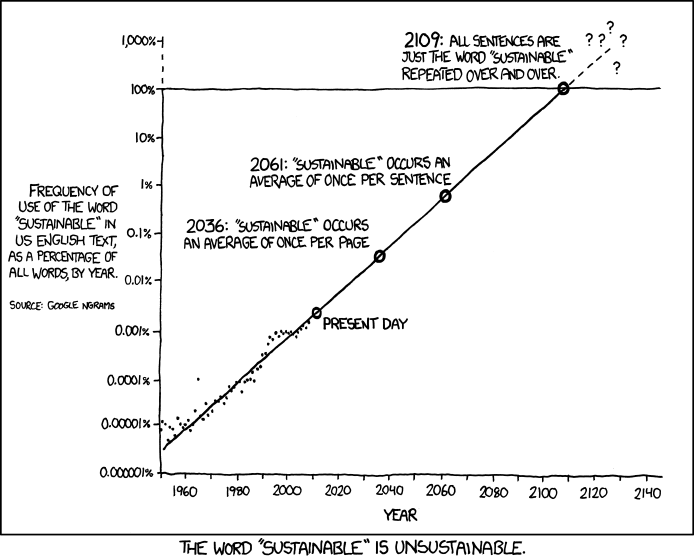
As regular readers will know, I'm not a fan of the word "sustainable" (in all its guises) and I'm going to do my best to avoid using it from here on in.
The broad aim of the policy paper is to draft new ways for our communities to work; but instead of being a top-down exercise where a central body or authority prescribes what communities should do, Plaid Cymru would much rather (in some aspects) it was the other way around, with communities taking more control over their own direction, whilst retaining a collective spirit – what Plaid have long called "decentralised socialism".
There are a number of challenges – depletion of resources & climate change, demographic change, increasing demand on public services. But there are also opportunities, like digital technologies, participatory democracy and a Basque-style collective economics, which can help meet these challenges in innovative ways.
The paper is split into three key themes : "empowering communities", alternative forms of investment and supporting infrastructure development.
The Community
![]() |
| Plaid advocate stronger community councils and new forms of democratic participation. (Pic : via todayinscocialsciences.blogspot.co.uk) |
- A National Community Development Programme (Connected Communities) which would be based off existing third sector infrastructure and help develop local social networks and co-ordinate local schemes.
- A Strategy and Integration Unit within the Welsh Government, which would guide longer-term thinking across all government departments and would be directly responsible to the First Minister.
- A Social Innovation Hub which would bring together people from different sectors and with different experiences to come up with innovative new ideas for public service delivery.
- A review of at what level powers should reside in local government, including stronger community councils and the introduction of Single Transferable Vote (STV) in local elections.
- A pilot of participatory democracy – starting with local budgets – and a digital government programme/Digital Wales fund which would encourage the use of new technologies to improve democratic engagement, promote open government and improve public service delivery (there's a related piece on this from the National Assembly blog covering the recent GovCampCymru 2014).
Communities actively supporting each other is a vital part of well-being.
These "active community" projects do work. Plaid give an example of a "time bank" in the Ely area of Cardiff (where people volunteer in exchange for time credits they can "spend" locally) which has made people feel better about themselves, enabled people to get to know each other better and given people the impression that they're actively improving their communities.
Plaid call for a shift in public sector thinking, where the public sector will work with communities instead of imposing decisions on them unilaterally, perhaps even ceding some control too.
This would require a review of what powers should reside where (something the Williams Commission largely looked over). But it would also mean changing how communities are governed, and Plaid propose a limited form of participatory democracy where decisions are made collectively instead of by representatives or officials.
Investment
![]() |
| Plaid would like to shift the focus of Communities First from whole communities towards individual families. (Pic : BBC Wales) |
- A Prevention Fund to ensure citizens don't go on to need more complicated and expensive public services.
- Promotion of alternative forms of finance, and the creation of a Community Investment Fund to underwrite or match fund alternative investments.
- Use public sector pension schemes to support long-term local investments (in particular housing), with a tax-relief scheme for social enterprises - if the powers are devolved (see : The Collective Entrepreneur).
- A Welsh "Green Book" which will "put sustainable development at its core".
- Legislative measures to improve the amount of domestic public procurement, with the aim of 75% of public contracts going to Welsh companies (currently 52%) (see : Public Procurement Reform & Plaid's "Plan C")
- Shift the focus of the £40million Communities First programme from deprived areas to deprived families.
The second theme focused on investment in light of "shrinking public finances". Although the paper says there's a lot happening already, Plaid believe things can go further. Alternative forms of finance which were discussed include crowd-sourcing, community banking/community bonds, credit unions, social impact bonds and the third sector's Community Investment Fund.
They cite the specific example of the Llangattock hydroelectricity scheme where 100 investors raised £270,000 in a co-operative scheme to generate energy, with a return of between 5-8% per year.
Examples were also given of public sector pension schemes being used to invest in the local community. Islington Council invested £20million of its £800million pension fund in housing, while there are talks about pooling the pension funds across all of London's local authorities. The Welsh local government pension scheme controls around £9billion in assets, and Plaid believes this could be used in a similar way.
Most of the rest of the discussion was about financial incentives and alternative business models. The Basque co-operative conglomerate, Mondragon, are brought up again as a model worthy of consideration, while a co-operative investment fund is mooted as a way to tie existing co-ops together in Wales to eventually create something on the same scale.
There's backhanded praise for the Treasury's "Green Book", which is used to "provide guidance to UK Government departments on putting together a robust business case to support policy change". Plaid believe a Welsh equivalent, which would come with a Welsh Treasury, should take into account social and environmental costs and benefits.
Infrastructure
- Using the reformed/stronger community councils to guide the development of neighbourhood-level infrastructure.
- Stronger standards on energy efficient and design, as well as mandatory Welsh language impact assessments for infrastructure projects.
- Simply the planning process and extend permitted development rights (i.e. changes to homes that don't require planning permission).
- Simplify Section 106 agreements so they're more transparent and create a new system of financial incentives/community benefit schemes.
- Possible legislative measures to give community bodies a right to purchase disused buildings, probably part of a wider-reaching Infrastructure Bill.
Infrastructure development is often led from "the top", so it was a real challenge to come up with ways in which this could be managed from "the bottom-up". The priorities might be different. An example's given where a community with a lot of older people might prioritise things like public toilets and seating – at relatively low cost – to create "age-friendly neighbourhoods".
Housing was picked out for special focus. At the moment, new housing developments are guided by centralised population estimates, meaning large numbers of houses are often built wherever the land is available with little thought given to how those communities would be planned, or what impact such developments have on the people already living there – including the Welsh language. Survey findings showed that higher-quality developments often endure less opposition. In terms of affordability, I've long supported things like modular/pre-fabricated homes.
Bringing old buildings back into community use was one of the key tenets of the Greenprint, and it returns again. The paper cites an example of community members in Llan Ffestiniog who received assistance to reopen a local pub; while there are other, more high-profile, examples like the Saith Seren in Wrexham.
Bottoms up?
![]() |
| Unfortunately, Welsh politics is a bit tied up at the moment. |
The announcement has been overshadowed somewhat, with the Welsh political establishment and media sent into fits of existential despair and near paralysis by an awe-inspiring trolling masterclass from the Daily Mail. The funniest thing about the whole event is that It's not even about the Welsh Government, it's about Ed Miliband.
Anyway, it's nice to be Mr Positive for a change, while the title is in no way a reference to last week's post.
I'm pleased to say this is firmly grounded on Planet Earth, and – once again – there's a lot to like and take from one of these papers. Keep 'em coming.
The biggest omission is detailed costings, and without that information this hits a very big brick wall. That information could easily be provided if Plaid are in a position in government to see this through though, which is perhaps a much harder task.
Another bump in the road could be psychology. People "coming together" is very "jolly hockey sticks", but introverted people like myself (who make up at least a third of the population) are unlikely to be as enthusiastic in the absence of an incentive.
For example, I often find people who try to pester or guilt me into doing something – on a wider level this includes (often self-appointed) "community leaders" and chuggers - incredibly annoying, patronising and draining. So traditional campaigning and community "call to arms" usually don't work with people like me.
Therefore, the widespread use and normalisation of things like "time banking" is critical, and hopefully that would be something Plaid's "Connected Communities" proposal would be able to oversee at a national level.
That's not to fault what's in it. In fact, I agree with most of it in principle and I can't think of much in there I disagree with. I've long supported direct democracy for example (Local Sovereignty II :The Community), and what Plaid propose is a good start – though I believe representative democracy is a hindrance at the lowest level.
They key to this is, as Plaid have said themselves, a "culture shift" in the Welsh public sector and I'd question if they (the public sector) are really brave enough to do some of the things recommended in this report.
Alright, it's not exactly a riveting read, and is so full of public sector buzzwords it makes me want to leave thesauruses around the Assembly estate like those little bibles. However, it's a damned side more intellectually honest than the Future Generations Bill, and the vision is significantly more coherent, practical and innovative.
....and I've only used "sustainable/sustainability" three times, one of which is a direct quote and the other two being myself complaining about it. It appears in the report around 92 times.